Constitution of Arlberg Ski Club inc 2026
Contents
1. Definitions and interpretation
2. Club details
3. Purpose and powers
4. Members
5. General Meetings
6. Committee
7. Committee meetings
8. Officers’ Duties
9. Interests
10. Patrons
11. Finances
12. Amendments
13. Bylaws and Integrity
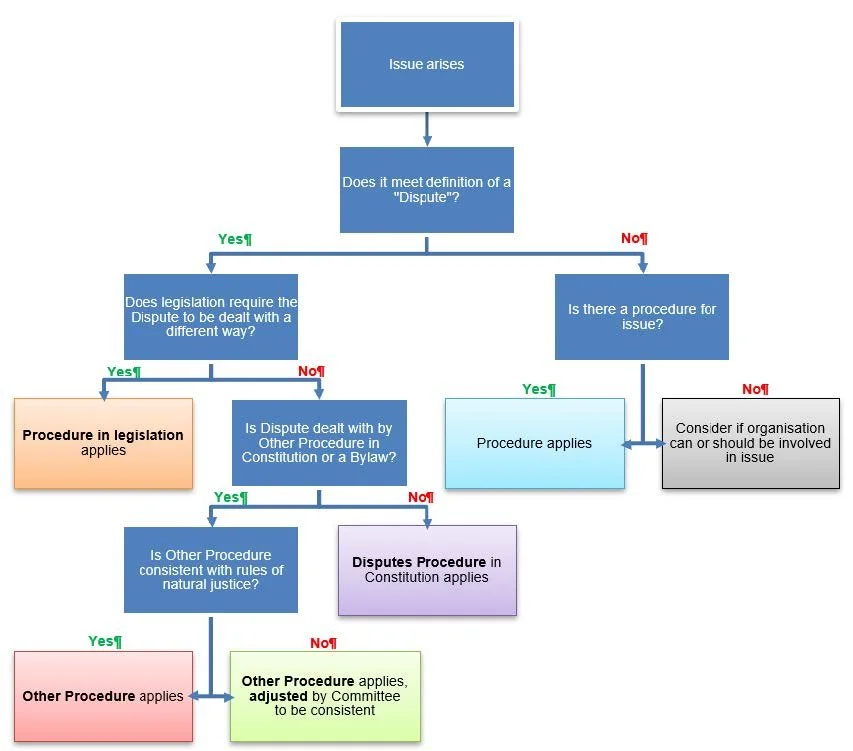
14. Dispute resolution
15. Liquidation and removal
16. Matters not provided for
Definitions and interpretation
1.1 Definitions: In this Constitution, unless the context requires otherwise, the following words and phrases have the following meanings:
Act means the Incorporated Societies Act 2022, including any amendments, and any regulations made under that Act.
AGM or Annual General Meeting means a meeting of the Members held once a year convened under this Constitution.
Bylaws means any bylaws, policies, regulations and codes of the Club made under clause 13.
Casual Vacancy is a vacancy which arises when a Committee Member does not serve their full term of office.
Committee means the Club’s governing body.
Committee Member means a member of the Committee.
Constitution means this Constitution, including any amendments and any schedules to this Constitution.
Contact Details means a physical or an electronic address and a telephone number.
General Meeting means an AGM or SGM of the Club.
Interested has the meaning given in section 62 of the Act.
Matter has the meaning given in section 62(4) of the Act.
Member means each person who for the time being is a member of the Club and includes all classes of members described in clause 4.3.
Officer means a Committee Member and any natural person occupying a position in the Club that allows the person to exercise significant influence over the management or administration of the Club.
Ordinary Member: An Ordinary Member is the standard, full-voting membership class, distinct from life, other non-ordinary memberships (as decided by the committee) or veteran members.
Ordinary Resolution means a resolution passed by a majority of votes cast.
SGM or Special General Meeting means a meeting of the Members, other than an AGM, called for a specific purpose or purposes.
Special Resolution means a resolution passed by a 75% majority of votes cast.
Working Day has the meaning given to that term under the Legislation Act 2019 and excludes the day observed as the anniversary in Auckland.
Interpretation: Unless the context otherwise requires:
(a) Words referring to the singular include the plural and vice versa.
(b) Clause headings are for reference only.
(c) Expressions referring to writing include references to words visibly represented, copied, or reproduced, including by email.
(d) Reference to a person includes any other entity or association recognised by law and vice versa and any reference to a particular entity includes a reference to that entity’s successors.
(e) A reference to any legislation includes any secondary legislation, statutory regulations, rules, orders or instruments made or issued pursuant to that legislation and any amendment to, re-enactment of, or replacement of, that legislation.
(f) All periods of time or notice exclude the days on which they are given.
1.2 Notices: Subject to any other notice requirements in this Constitution, any notice or other communication given under this Constitution must be in writing and will be given to:
(a) a Member if delivered by hand to the Member or sent to the address set out in their Contact Details or sent to their last known email address;
(b) the Club if sent to secretary@arlberg.co.nz or by post to the Club’s registered office set out on the Register of Incorporated Societies.
1.3 Receipt of notices: A notice is deemed to have been received:
(a) if delivered by hand, at the time of delivery;
(b) if given by post, when left at the address of that party or five Working Days after being put in the post; or
(c) if given by email, upon production of a physical copy of the email detailing the time and the date the email was sent (provided that the sender does not receive any "out of office" auto-reply or other indication of non-receipt), provided that any notice or communication received or deemed received after 5pm on a Working Day, or on a day which is not a Working Day, will be deemed not to have been received until the next Working Day.
2. Club details
2.1 Name: The name of the society is Arlberg Ski Club Incorporated.
2.2 Charitable status: The Club is registered as a charitable entity under the Charities Act 2005.
2.3 Registered office: The registered office of the Club is at the place the Committee decides.
2.4 Contact person: At its first Committee meeting following an AGM, the Committee must appoint or reappoint at least one, and a maximum of three, persons to be the contact person, subject to those persons meeting the eligibility criteria set out in the Act. The Committee must advise the Registrar of Incorporated Societies of any change in the contact person or their Contact Details.
3. Purpose and powers
3.1 Purpose: The charitable purposes of the Club Benefit the community by -
a) Promote participation in snow sports To encourage and support participation in all forms of snow sports, and associated alpine activities, in a manner that is inclusive, safe, accessible, and supportive of a wide range of abilities.
b) Support families and youth To provide a family-friendly environment that offers opportunities for children, youth, parents, and multi-generational groups to participate together in snow sports and alpine recreation, and to develop skills, confidence, and positive outdoor experiences.
c) Foster community connection To promote social interaction, mutual support, fellowship, and recreational opportunities among members, acknowledging the importance of flexible, low-barrier participation suited to diverse lifestyles and modern communities.
d) Protect the natural environment To promote the preservation and protection of native flora, fauna, alpine ecosystems, and natural features, and to encourage responsible recreation that minimises environmental impact, particularly in the areas around the club.
e) Provide affordable access to recreation and learning To assist, where possible, in providing reasonably priced accommodation, facilities, services, and resources that enable families, individuals, small groups and school groups to participate in snow sports, tramping, and alpine recreation and learning.
f) Respecting cultural significance To acknowledge the cultural significance of the maunga and surrounding environments to iwi and hapū, and to encourage Club activities that respect the role of mana whenua as kaitiaki of these areas.
g) Promote outdoor recreation and wellbeing To encourage walking, tramping, mountaineering, and mountain exploration, and to promote appreciation and understanding of alpine and backcountry environments through practical experiences.
3.2 Capacity and powers: The Club has, both within and outside New Zealand, full capacity, rights, powers and privileges to carry on or undertake any activity, do any act, or enter into any transaction, subject to this Constitution, the Act, any other legislation, and the general law. 5
4. Members
4.1 Application: An application to become a Member (Application) must be in the form required by the Committee. All Applications are decided by the Committee which may accept or decline an Application in its absolute discretion. A person becomes a Member when their Application has been accepted and they have paid the required fees and satisfied any other preconditions.
4.2 Member consent: A person or entity consents to become a Member by submitting an Application to the Club and paying fees, unless otherwise specified in this Constitution. Members who have been a Member of the Club prior to this Constitution are deemed to have provided that consent.
4.3 Types of Members: The classes of membership and the method by which Members are admitted to different classes of membership are:
(a) Senior, Life, Veteran and any other categories of member as the committee decides.
(b) Senior Member: A Senior Member is a person over the age of eighteen
(c) Life Member: A Life Member is a person honoured for highly valued services to the Club elected as a Life Member by resolution of the Committee or by resolution of a General Meeting passed by a simple majority of those Members present and voting. A person consents to becoming a Life Member on acceptance of their life membership. A Life Member shall have all the privileges of a Member but shall be exempt from the payment of any entrance fee, subscription or levy.
(d) Veteran Member: A Veteran Member is a member who is 65 years or older, has a minimum 10 years ordinary membership and has met their work party obligations while being an ordinary member. Veteran members will be entitled to all privileges of ordinary membership, pay 75% of the ordinary membership subscription, be released from further work party obligations and not be invoiced or required to pay any levy or additional contribution other than the annual subscription and lodge occupancy fees.
4.4 Becoming a Member - Process
An applicant for membership must complete an application form, supply any information, or attend an interview as may be reasonably required by the Committee regarding an application for membership and will become a Member on acceptance of that application by the Committee and payment of any Entrance Fee plus annual subscription as from time to time will be decided by the Committee and AGM.
4.5 Member rights and obligations: Members acknowledge and agree that:
(a) they are bound by, and will comply with, this Constitution and the Bylaws;
(b) they are entitled to all rights and entitlements granted by this Constitution or as determined by the Committee;
(c) to receive, or continue to receive or exercise member rights, they must meet all the member requirements set out in this Constitution and the Bylaws or as otherwise set by the Committee, including payment of any membership or other fees or levy within the required time period;
(d) if they fail to comply with sub-clause (c) the Committee may terminate their membership, but the Member continues to be bound by this Constitution;
(e) they do not have any rights of ownership of, or the automatic right to use, the Club’s property;
(f) they will promote the interests and purposes of the Club and must not do anything to bring the Club into disrepute: and
(g) they will behave and conduct themselves to the standard acceptable to the committee, participate and cooperate with the lodge duties, abide by the lodge officer’s instructions, look after the lodge as their own place and be friendly and kind to the other guests/members staying.
4.6 Suspension of Member: If a Member is, or may be, in breach under clause 4.5, and two thirds of the Committee believes it is in the best interests of the Club to do so, the Committee may suspend the Member until final determination of the matter under the dispute resolution process applicable to the matter. Before imposing any suspension, the Member must be given notice of the suspension.
4.7 Suspension of Member rights: Unless otherwise determined by the Committee, while a Member is suspended the Member is not entitled to attend, speak or vote at a General Meeting or to any other rights or entitlements as a Member, nor use the club lodge or facilities and is not entitled to continue to hold office in any position within the Club, until such time as the alleged breach is resolved or determined.
4.8 Ceasing to be Member: A Member ceases to be a Member:
(a) on death;
(b) by giving notice in writing to the Committee of their resignation;
(c) Any Member whose Annual Subscription is three months in arrears shall, after notice has been given to them by the Secretary, ipso facto cease to be a member of the Club; but the Committee shall have the power at its discretion to reinstate such a member on payment of all arrears.
(d) Members reinstated under the preceding rule, and Members who shall have resigned from the club and may be desirous of re-entering, if re-elected, may not be liable for the Entrance Fee at the committee’s discretion;
(e) if their membership is terminated under clause 4.5(d);
(f) if their membership is terminated following a dispute resolution process or such other process set out or referred to in this Constitution.
4.9 Consequences of ceasing to be a Member: A Member who ceases to be a Member:
(a) remains responsible to pay all their outstanding membership and other fees to the Club;
(b) must return all the Club’s property if required;
(c) ceases to be entitled to any rights of a Member.
4.10 Membership fees:
(a) Every member not being a Life Member shall pay an Annual Subscription as per the membership policy which shall be paid by 31 May each Year. The Annual Subscription to be charged for each Year shall be determined at the Annual General Meeting.
(b) Bunk Fees in respect of each Member and of any person not being a Member of the Club shall be charged for the use of the facilities of the hut or other building erected by the Club. The Committee shall also have the power to change the fees whenever they consider necessary.
(c) The committee shall be responsible for setting each member type requirements for attending work parties (where not already addressed in the constitution), and / or, setting an annual maintenance levy to be paid in lieu of attending a work party.
4.11 Member register: The Committee will keep an up-to-date Member register, which includes each Member’s name, Date of Birth, Contact Details and the date they became a Member. A Member must provide notice to the Club of any change to their Contact Details. The Member register will be updated as soon as practicable after the Committee becomes aware of changes of the information recorded in the Member register. The Committee will keep a record of those who have ceased to be a Club member within the previous 7 years and the date on which they ceased to be a member.
5. General Meetings
5.1 AGM: An AGM must be held once a year at the time, date and place as the Committee decides, but not more than 6 months after the balance date of the Club and not more than 15 months after the previous AGM.
5.2 Preliminary notice of AGM: The Members will be given at least thirty days’ notice calling for nomination of candidates at the AGM. Notice to Members of an AGM may be given by posting on the Club’s website.
5.3 Business of AGM: The following business will be discussed at the AGM:
(a) confirmation of the minutes of the previous AGM or any SGM.
(b) the Committee’s presentation of the following information during the most recently completed accounting period:
(i) the annual report on the operations and affairs of the club;
(ii) the annual financial statements;
(iii) notice of any disclosures of conflicts of interest made by Officers (including a brief summary of the Matters, or types of Matters, to which those disclosures relate);
(c) set any subscriptions and fees for the current Year.
(d) the election of the President, Secretary, Treasurer and other Committee Members;
(e) consideration of any motions proposing to amend this Constitution that have been properly submitted for consideration at the AGM;
(f) consideration of any other items of business that have been properly submitted for consideration at the AGM.
(g) consider any general business.
5.4 Notice of proposed motions: Members must give notice of any proposed motions and other items of business to the Club at least fourteen days before the date of the AGM.
5.5 Notice of AGM with Agenda: Notice of the agenda containing the business to be discussed at the AGM and copies of the Financial Statements must be sent to all persons entitled to attend the AGM at least seven days before the date of the AGM. No additional items of business can be voted on other than those set out in the agenda, but the Members present may agree by Special Resolution to discuss any other items.
5.6 Except by Special Resolution of the General Meeting passed by two-thirds majority of those present, no business shall be transacted at such General Meeting except that of which notice shall have been given as aforesaid. If any general business other than purely routine business of which notice shall have been given shall be transacted, the resolution or resolutions shall not be effective until fourteen days after the General Meeting. If within that period any five Members not present at the General Meeting shall have forwarded to the Secretary an objection in writing to such resolution or resolutions, the Secretary shall call a further General Meeting at which such resolution or resolutions shall be confirmed or otherwise, and the resolution or resolutions objected to shall not be effective until such further General Meeting is held. The Secretary shall, within seven days of any General Meeting, distribute the minutes or a summary of all resolutions passed at that meeting to every Member. Distribution may be made by email or by posting the minutes on the Club’s website.
5.7 Calling of SGM: The Committee must call a SGM if it receives a written request stating the purpose of the SGM from the Committee itself or by 15 of Members or Life Members
5.8 Notice of SGM: Members must be given at least seven days’ notice of the SGM, unless the Committee, in its discretion, decides that the nature of the SGM business is of such urgency that a shorter period of notice is to be given to Members. A SGM may only consider and deal with the business specified in the request for the SGM.
5.9 Method of holding meeting: A General Meeting may be held by a quorum of people being assembled at the time and place appointed for the meeting, participating in person, or by audio link, audio-visual link or other electronic communication or by a combination of those methods.
5.10 Quorum: No business may occur at any General Meeting unless a quorum is present at the meeting’s start time. The quorum for a General Meeting is 15 number of members or 20% of members eligible to vote, whichever is the lower of the Members who are entitled to vote, including Members present by casting votes by electronic means or by proxy. The quorum must always be present during the General Meeting.
5.11 No quorum at AGM: If a quorum is not met within 30 minutes of the AGM’s scheduled start time, the AGM is adjourned to a day, time and place set by the chair of the AGM. If no quorum is met at the further AGM, the Members present, in person or through audio, audio visual link or other electronic communication, 15 minutes after the further AGM’s scheduled start time are deemed to constitute a valid quorum.
5.12 No quorum at SGM: If a quorum is not met within 30 minutes of the scheduled start time of the SGM, the SGM is cancelled.
5.13 Control of General Meetings: The President chairs General Meetings. If that person is unavailable, the Vice-President will preside. In the absence of both of those persons, or both person having a conflict of interest, the Members present will elect a person to chair the General Meeting.
5.14 Omissions and irregularities: The General Meeting and its business will not be invalidated if one or more Members do not receive notice of the meeting. The General Meeting and its business will not be invalidated by an irregularity, error or omission in notices, agendas and papers of the meeting or notice within the required time frame or the omission to give notice to all Members and any other error in the organisation of the meeting if:
(a) the chair of the meeting in their discretion determines that it is still appropriate for the meeting to proceed despite the irregularity, error, or omission; and
(b) a motion to proceed is put to the meeting and a majority, of two-thirds of votes cast, is obtained in favour of the motion to proceed.
5.15 Attendance: Members and any other persons invited by the Committee are eligible to attend and speak at General Meetings.
5.16 Voting: A Member is entitled to exercise one vote on any motion at a General Meeting in person or by proxy.
5.17 Voting by electronic means: Voting by electronic means is permitted.
5.18 Voting by proxy: Proxy voting is permitted. The chair of the General Meeting must receive notice of the proxy signed by the Member prior to the start of the meeting. The form of the proxy is: I [insert name] of [insert address] being a member of the Club appoint [insert name of proxy] as my proxy to speak [and vote] for me at the General Meeting to be held on [insert date] and at any adjournment of that General Meeting. I direct my proxy to vote in the following manner [insert resolutions and whether the proxy is to vote for or against].
5.19 Conduct of voting: Voting is conducted by voices or a show of hands as determined by the chair of the meeting, unless a secret ballot is called for by any Member or as otherwise required under this Constitution.
5.20 Minutes: Minutes must be kept of all General Meetings.
5.21 Resolution: An Ordinary Resolution of Members at a General Meeting is sufficient to pass a resolution, except as specified in the Act or this Constitution.
5.22 Resolution passed in lieu of meeting: A resolution in writing signed or consented to by email or other electronic means by a 75% majority of Members is valid as if it had been passed at a General Meeting provided the requirements under sections 89 to 92 of the Act are complied with. Any resolution may consist of several documents in the same form each signed by one or more Members.
6. Committee
6.1 Functions and powers: Subject to any modifications, exceptions, or limitations contained in the Act or in this Constitution the Committee must manage, direct or supervise the operation and affairs of the Club and has all the powers necessary for managing, and for directing and supervising the management of, the operation and affairs of the Club.
6.2 Composition: The Committee consists of the President, the Vice-President, a Secretary, a Treasurer and up to eight other persons elected at the AGM.
6.3 Role of President: The President will engage in activities agreed with the Committee which may include activities to promote the Club, good relations and communications between Members and the reputation and best interests of the Club, and to preside at Club events.
6.4 Role of Secretary: The Secretary will:
(a) attend to all correspondence and keep minutes of General Meetings and Committee meetings and ensure that any subcommittee keeps minutes; and
(b) keep all records and generally perform all the secretarial work of the Club. With the written approval of the Committee these tasks may be varied or delegated but the Secretary remains responsible for their performance.
6.5 Role of Treasurer: The Treasurer will:
(a) receive all money paid to or received by the Club and pay all accounts approved by the Committee. The Committee may delegate levels of payment to the Treasurer by written authority;
(b) invest all funds of the Club in the manner directed by the Committee; and
(c) keep the Club’s financial accounts, submit appropriate financial statements at the AGM and undertake other tasks required by the Committee.
6.6 Election of Committee Members: Committee Members are elected as follows:
(a) the Committee must call for nominations for any Committee Member positions that are to be vacated at an AGM at least thirty days before the AGM;
(b) nominations are made in the form decided by the Committee and must be received by the date set by the Committee and if no date is set nomination can be received up to and including the day of the AGM; (c) the Committee must give notice of the nominations received (at that time) to all Members at in the AGM agenda;
(d) if at the Annual General Meeting the number of candidates duly proposed for the Committee does not exceed the number of vacancies, the Chair shall call for nominations from the floor before declaring the candidates elected
(e) at the AGM, if there are more nominees than number of positions available, the election is by secret ballot, unless otherwise decided by the Chair of the General Meeting and approved by a Special Resolution of Members. If a secret ballot is held, two scrutineers must be appointed at the General Meeting to count the votes;
(f) those nominees who have the highest number of votes in their favour to fit the number of vacant positions are declared elected;
(g) if the number of votes for one or more nominees is equal to another nominee, a further vote will be held between the tied nominees;
(h) if there is only one nominee for a vacant position, that person is declared to be elected without the need for a vote;
(i) in the event of there being no person or insufficient number of persons to make the full number of Officers seeking election who have either given notice of their intention to seek re-election or been nominated as provided in Rule 6.6, then an additional person or sufficient additional persons shall be elected at the Annual General Meeting to make up the full number of Officers, notwithstanding that such additional person or persons may not have given notice or been nominated as aforesaid. A Member may fill two roles if there are insufficient candidates to fill the specified Officer roles.
6.7 Qualification: Every Committee Member must, in writing:
(a) consent to be a Committee Member; and
(b) certify that they are not disqualified from being elected or holding office as a Committee Member by this Constitution or under section 47 of the Act or under section 36B of the Charities Act 2005.
6.8 Disqualification: The following persons are disqualified from being elected or holding office as a Committee Member:
(a) A person who is an employee of, or independent contractor to, the Club.
(b) A person who is disqualified from being elected or holding office as a Committee Member under section 47 of Act or under section 36B of the Charities Act 2005.
(c) A person who has been removed as a Committee Member following a process under this Constitution or any Bylaw.
If an existing Committee Member becomes or holds any position in (a) above then upon their appointment to such a position, they are deemed to have vacated their office as a Committee Member. If any of the circumstances listed in (b) above occur to an existing Committee Member, they are deemed to have vacated their office upon the relevant authority making an order or finding against them of any of those circumstances.
6.9 Term of office: There are no restrictions on the length of term of any Officer of the Club
6.10 Casual Vacancy: If a Casual Vacancy arises, the remaining Committee Members may:
(a) appoint a person of their choice to fill the Casual Vacancy until the expiry of the term of the person they replace; or
(b) appoint a person of their choice to fill the Casual Vacancy only until the next AGM, at which a person is elected to fill the remainder of the term of the Casual Vacancy; or
(c) may leave the Casual Vacancy unfilled until the next AGM, at which a person is elected to fill the remainder of the term of the Casual Vacancy.
6.11 Suspension of Committee Member: If any Committee Member is or may be the subject of an allegation, notice or charge described under clause 6.8 or any circumstances arise in relation to a Committee Member which are or may be of concern to the Committee, the remaining Committee Members may by Special Resolution suspend the Committee Member from the Committee and set conditions as it requires pending the final determination of the allegation, notice, charge or circumstances. Before imposing any suspension, the Committee Member must be given notice of the suspension.
6.12 Removal of Committee Member:
(a) The Committee may, by Special Resolution, remove any Committee Member from the Committee before the expiry of their term of office if the Committee considers the Committee Member concerned:
(i) has seriously breached duties under this Constitution or the Act; or
(ii) is no longer a suitable person to be a Committee Member.
(b) The Committee Member who is the subject of the motion is counted for the purpose of reaching a quorum but will not participate in the vote on the motion.
(c) Before considering a motion for removal, the Committee Member who is the subject of the motion must be given:
(i) notice that a Committee meeting is to be held to discuss the motion to remove the Committee Member; and
(ii) adequate time to prepare a response; and
(iii) the opportunity prior to the Committee meeting to make written submissions; and
(iv) the opportunity to be heard at the Committee meeting.
6.13 Committee Member ceasing to hold office: A person ceases to be a Committee Member if:
(a) their term expires; 13
(b) the person resigns by delivering a signed notice of resignation to the Committee;
(c) the person is removed from office under this Constitution;
(d) the person becomes disqualified from being an officer under section 47(3) of the Act or section 36B of the Charities Act 2005;
(e) the person dies.
7. Committee meetings
7.1 Calling meetings: Committee meetings may be called at any time by the Chair or by any 4 Committee Members, but generally the Committee meets monthly.
7.2 Meeting procedure: Except to the extent specified in the Act or this Constitution, the Committee may regulate its own procedure.
7.3 Quorum: The quorum for a Committee meeting is five Committee Members. Any Committee Member may be counted for the purposes of a quorum, participate in any and vote on any proposed resolution at a Committee meeting without being physically present. This may only occur at Committee meetings where an audio or audio-visual link or other electronic communication provided that all persons participating in the Committee meeting can hear each other effectively and simultaneously.
7.4 Chair: The Committee will elect the Chair from amongst the Committee Members. The Chair will chair Committee meetings. If the Chair is unavailable, another Committee Member must be appointed by the Committee to undertake the Chair’s role during the period of unavailability.
7.5 Voting: Each Committee Member has one vote. Voting is by voices or on request of any Committee Member by a show of hands or by a ballot. Proxy and postal votes are not permitted. Voting by electronic means is permitted. If there is an equality of votes, the Chair does not have a casting vote.
7.6 Resolution in writing: A resolution in writing signed or consented to by email or other electronic means by a majority of Committee Members is valid as if it had been passed at a Committee meeting. Any resolution may consist of several documents in the same form each signed by one or more Committee Members.
8. Officers’ Duties
An Officer:
(a) when exercising powers or performing duties as an Officer, must act in good faith and in what the Officer believes to be the best interests of the Club;
(b) must exercise a power as an Officer for a proper purpose;
(c) must not act, or agree to the Club acting, in a manner that contravenes the Act or this Constitution;
(d) when exercising powers or performing duties as an Officer, must exercise the care and diligence that a reasonable person with the same responsibilities would exercise in the same circumstances, taking into account, but without limitation the nature of the Club, the nature of the decision and the position of the Officer and the nature of the responsibilities undertaken by them;
(e) must not agree to the activities of the Club being carried on in a manner likely to create a substantial risk of serious loss to the Club’s creditors or cause or allow the activities of the Club to be carried on in a manner likely to create a substantial risk of serious loss to the Club’s creditors;
(f) must not agree to the Club incurring an obligation unless the Officer believes at that time on reasonable grounds that the Club will be able to perform the obligation when it is required to do so; and
(g) when exercising powers or performing duties as an Officer, may rely on reports, statements, and financial data and other information prepared or supplied, and on professional or expert advice given, by any of the following persons:
(i) an employee whom the Officer believes on reasonable grounds to be reliable and competent in relation to the matters concerned;
(ii) a professional adviser or expert in relation to matters that the officer believes on reasonable grounds to be within the person’s professional or expert competence; or
(iii) any other Officer or subcommittee of Officers on which the Officer did not serve in relation to matters within the Officer’s or subcommittee’s designated authority,
if the Officer, acts in good faith, makes proper inquiry where the need for inquiry is indicated by the circumstances, and has no knowledge that the reliance is unwarranted.
9. Interest
9.1 Register of interests: The Committee must keep a register of interest disclosures made by Officers.
9.2 Duty to disclose interest: An Officer who is Interested in a Matter relating to the Club must disclose details of the nature and extent of the interest (including any monetary value of the interest if it can be quantified) to the Committee, as soon as practicable after the officer becomes aware that they are interested in the Matter and include it in the register of interests.
9.3 Consequences of being Interested: A Committee Member who is Interested in a Matter:
(a) must not vote or take part in a decision of the Committee relating to the Matter, unless all non-interested Committee Members consent;
(b) must not sign any document relating to the entry into a transaction or the initiation of the Matter, unless all non-interested Committee Members consent;
(c) must not take part in any Committee discussion relating to the Matter or be present at the time of the Committee decision, unless all non-interested Committee Members consent;
(d) may be counted for the purpose of determining whether there is a quorum at any meeting at which the Matter is considered
9.4 Calling of SGM: Despite clause 9.3, if 50% or more Committee Members are Interested in a Matter, an SGM must be called to consider and determine the Matter.
9.5 Notice of failure to comply: The Committee must notify Members of a failure to comply with section 63 or 64 of the Act, and of any transactions affected, as soon as practicable after becoming aware of the failure.
10. Patrons
A person may be invited by the Committee to be a Patron to show their support for the Club and to help establish or maintain public credibility of the Club. A Patron is entitled to attend and speak at General Meetings but has no right to vote.
11. Finances
11.1 Control and management of finances: The funds and property of the Club are controlled, invested and disposed of by the Committee, subject to this Constitution and devoted solely to the promotion of the purposes of the Club set out in clause 3.
11.2 A bank account shall be kept at such bank or banks as the Committee may from time to time determine and shall be operated on by any two such members of the Committee as the Committee shall appoint.
11.3 All funds of the Club shall be paid into the Club bank account or accounts, and any part thereof may, if the Committee so determine, be invested
All accounts paid or for payment shall be submitted to the Committee for approval of payment.
11.4 Balance date: The Club’s balance date is December 31st or on the date as the Committee decides.
11.5 Audit or Review of financial statements: Where the club falls below the legal threshold requiring the Club to undertake a review or audit of the Club financial statements, the committee will decide if a review or audit will take place. Otherwise, the Club will comply with the legislation for financial reviews and audits.
11.6 No personal benefit: The Officers and Members may not receive any distributions of profit or income from the Club. This does not prevent Officers or Members:
(a) receiving reimbursement of actual and reasonable expenses incurred, or
(b) entering into any transactions with the Club for goods or services supplied to or from them, which are at arms’ length, relative to what would occur between unrelated parties, provided no Officer or Member is allowed to influence any such decision made by the Club in respect of payments or transactions between it and them, their direct family or any associated entity.
12. Amendments
12.1 Amendments: This Constitution may only be amended or replaced by Special Resolution of Members at a General Meeting.
12.2 Any proposed resolution to amend or replace this Constitution shall be signed by at least 50 per cent of eligible Members and given in writing to the Committee at least 20 working days before the General Meeting at which the resolution is to be considered and accompanied by a written explanation of the reasons for the proposal.
12.3 When an amendment is approved by a General Meeting it shall be notified to the Registrar of Incorporated Societies in the form and manner specified in the Act for registration, and shall take effect from the date of registration.
12.4 As a Registered Charity under the Charities Act 2005, the Club must also notify to Charities Services of any amendment as required by section 40 of that Act.
12.5 No amendment: No addition to, deletion from or alteration of this Constitution may be made which would allow personal pecuniary profits to any individuals.
13. Bylaws and Integrity
13.1 Bylaws: The Committee may make and amend Bylaws for the conduct and control of the Club’s activities and codes of conduct applicable to Members. Any Bylaw must be consistent with this Constitution, the Club’s purposes set out in clause 3, the Act and any other laws. All Bylaws are binding on the Club and the Members. The making, amendment, revocation, or replacement of a Bylaw is not an amendment of this Constitution.
14. Dispute resolution
14.1 Definitions: In this clause 14:
(a) Dispute means a disagreement or conflict between and among any one or more Members, any one or more Officers and the Club, that relates to an allegation that:
(i) a Member or an Officer has engaged in misconduct; or
(ii) a Member or an Officer has breached, or is likely to breach, a duty under this Constitution or the Act; or
(iii) the Club has breached, or is likely to breach, a duty under this Constitution or the Act; or
(iv) a Member’s rights or interests as a member have been damaged or Members’ rights or interests generally have been damaged;
(b) Disputes Procedure means the procedure for resolving a Dispute set out in clauses 14.2 to 14.10; 18
(c) a Member is a reference to a Member acting in their capacity as a Member;
(d) an Officer is a reference to an Officer acting in their capacity as an Officer.
Disputes Procedure
This is an example of how we might deal with disputes and is largely based on Schedule 2 of the Act
14.2 Raising a complaint:
(a) A Member or an Officer may start the Disputes Procedure (a Complaint) by giving written notice to the Committee setting out:
(i) the allegation to which the dispute relates and who the allegation is against; and
(ii) any other information reasonably required by the Club.
(b) The Club may make a Complaint involving an allegation against a Member or an Officer by giving notice to the person concerned setting out the allegation to which the Dispute relates.
(c) The information given must be enough to ensure a person against whom the Complaint is made is fairly advised of the allegation concerning them, with sufficient details given to enable them to prepare a response.
14.3 Investigating and determining Disputes: Unless otherwise provided, the Club must as soon as is reasonably practicable after receiving or becoming aware of a Complaint, ensure the Dispute is investigated and determined. Disputes must be dealt with in a fair, efficient, and effective manner. Whilst needing to provide sufficient information about the Complaint to the Respondent in order for the Respondent to form a response, the Club must ensure the safety and wellbeing of the complainant and any parties associated with the Complaint which may involve redacting certain identifying details.
14.4 Decision to not proceed with a matter: Despite the contents of the Disputes Procedure, the Club may decide not to proceed with a matter if:
(a) the Complaint is trivial; or
(b) the Complaint does not appear to disclose or involve any allegation of the following kind:
(i) any material misconduct; or
(ii) any material breach or likelihood of material breach of a duty under this Constitution or the Act; or
(iii) any material damage to a Member’s rights or interests or Members’ rights or interests generally; or
(c) the Complaint appears to be without foundation or there is no apparent evidence to support it; or 19
(d) the person who makes the Complaint has an insignificant interest in the matter; or
(e) the conduct, incident, event, or issue giving rise to the Complaint has already been investigated and dealt with under this Constitution; or
(f) there has been an undue delay in making the Complaint.
14.5 Complaint may be referred: The Club may refer a Complaint to:
(a) a hearing body or person authorised, delegated or appointed by the Committee to hear and resolve Disputes, and includes an arbitral tribunal (Hearing Body); or
(b) a subcommittee or an external person to investigate and report; or
(c) any type of consensual dispute resolution with the consent of all parties to the Complaint.
14.6 Hearing Body: The Committee may determine the composition, jurisdiction, functions and procedures of, and any sanctions which can be imposed by, any Hearing Body. Each Hearing Body has delegated authority by the Committee to resolve, or assist to resolve, Complaints.
14.7 Bias: An individual may not be part of a Hearing Body in relation to a Complaint if two or more members of the Committee or of the Hearing Body consider there are reasonable grounds to believe that the individual may not be:
(a) impartial; or
(b) able to consider the matter without a predetermined view.
14.8 Complainant’s right to be heard:
(a) The Member or Officer has a right to be heard before the Complaint is resolved or any outcome is determined. If the Club makes a Complaint, the Club has a right to be heard before the Complaint is resolved or any outcome is determined, and a Committee Member, appointed by the Committee to represent the Club, may exercise that right on behalf of the Club.
(b) A Member or Officer or the Club must be taken to have been given the right if:
(i) the Member or Officer or the Club has a reasonable opportunity to be heard in writing or at an oral hearing, if one is held; and
(ii) an oral hearing is held if the Hearing Body considers that an oral hearing is needed to ensure an adequate hearing; and
(iii) an oral hearing, if any, is held before the Hearing Body; and
(iv) the Member’s or Officer’s or the Club’s written statement or submission, if any, are considered by the Hearing Body.
14.9 Respondent’s right to be heard: The Member or Officer who, or the Club which, is the subject of the Complaint (Respondent) has a right to be heard before the Complaint is resolved or any outcome is determined. If the Respondent is the Club, 20 a Committee Member may exercise the right on behalf of the Club. A Respondent must be taken to have been given the right if:
(a) the Respondent is fairly advised of all allegations concerning the Respondent, with sufficient details and time given to enable the Respondent to prepare a response; and
(b) the Respondent has a reasonable opportunity to be heard in writing or at an oral hearing, if one is to be held; and
(c) an oral hearing is held if the Hearing Body considers that an oral hearing is needed to ensure an adequate hearing; and
(d) an oral hearing, if any, is held before the Hearing Body; and
(e) the Respondent’s written statement or submissions, if any, are considered by the Hearing Body.
14.10 Appeals: There is no right of appeal or right of review of a decision.
15. Liquidation and removal
15.1 Notice: The Committee must give notice to all Members at least 20 Working Days of a proposed motion:
(a) to appoint a liquidator;
(b) to remove the Club from the Register of Incorporated Societies; or
(c) to cancel the Society’s registration as a Charity: or
(d) for the distribution of the Club’s surplus assets.
15.2 The notice must comply with section 228 of the Act and include details of the General Meeting at which the proposed motion is to be considered. Special Resolution: Any resolution for a motion set out in clauses 15.1(a) to (c) must be passed by a Special Resolution of Members.
15.3 Surplus assets: If the Club is liquidated, or removed from the Register, no distribution shall be made to any Member, and if any property remains after the payment of all costs, debts and liabilities, the surplus assets must be disposed of to a single not-for-profit entity, or organisation with charitable status, that shares a similar purpose to the Club. The list of potential entities or organisations shall be generated by the remaining members of the committee, and a vote undertaken, including all remaining members of the club, to select the final organization or entity that will receive the remaining funds.
16. Matters not provided for
If any matter arises that, in the opinion of the Committee, is not provided for in this Constitution or any Bylaws, or if any dispute arises out of the interpretation of this Constitution or the Bylaws, the matter or dispute will be determined by the Committee